
Autistic Burnout…Signs, Causes and How to Recover.
Autistic Burnout: Signs, Causes and How to Recover
What is autistic burnout and how do I recover from it? Autistic burnout is a state of profound physical, cognitive, and emotional exhaustion that happens when an autistic person's nervous system has been operating beyond sustainable capacity for too long. It is distinct from ordinary tiredness and from clinical depression, and it does respond to the right kind of recovery. But recovery looks different from what most people expect: it is not about pushing through, building resilience, or learning to tolerate the same demands more efficiently. It is about genuinely changing the conditions.
This guide walks through what autistic burnout actually is, what drives it, how to recognise it in yourself or someone you care about, and how to move through it in stages: rest first, then reduce load, then rebuild gradually, and finally reconnect with your autistic identity. If you are reading this in the middle of burnout right now, we want you to know: what you are experiencing has a name, it has causes, and there is a way through. Support programmes like Autistically You at Mandurah ND Centre exist specifically for this moment.
Key takeaways
Burnout is not a personal failing: It is the predictable result of an autistic nervous system operating beyond sustainable capacity, often due to masking and burnout cycles, sensory overload, and unmet support needs.
It differs from depression: Autistic burnout typically involves skill regression, increased sensory sensitivity, and capacity loss; depression typically involves pervasive loss of interest and hopelessness.
Recovery takes time: Mild burnout may ease over weeks; deeper burnout commonly takes months or even years, and the timeline depends on whether the underlying demands actually change.
Rest means more than sleep: Low-stimulation time, stimming, special interests, and reducing masking are all part of meaningful rest for autistic fatigue recovery.
Nature-based supports are genuinely useful: Forest bathing and therapeutic horticulture offer sensory-regulated, low-demand environments that suit autistic nervous system recovery.
Community matters: Peer connection with other autistic people reduces the isolation and shame that often accompany burnout, and can be a long-term protective factor.
What is autistic burnout and how do I recover from it?
Neurodivergent burnout is a recognised experience distinct from everyday stress or clinical depression, yet it is frequently misunderstood, misdiagnosed, or missed entirely. Understanding exactly what it is, and what drives it, is the first step toward genuine burnout recovery strategies for autism that actually work.
What makes autistic burnout its own distinct experience
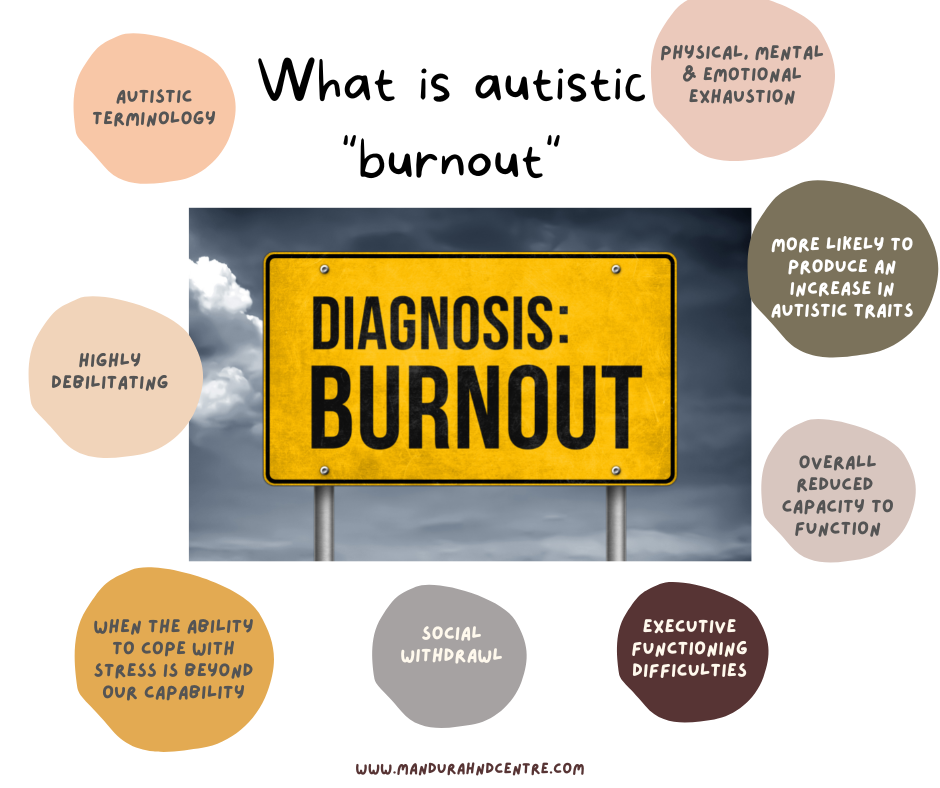
Autistic burnout has three core markers: extreme exhaustion, a reduced ability to function, and increased sensitivity to sensory or social demands. Importantly, it is the result of operating in a world designed for neurotypical people, not a personal failing or a mental health disorder. Unlike general occupational burnout, which is tied to workplace stress, autistic burnout can be triggered by everyday life: shopping, attending social events, communicating in neurotypical ways, and managing ordinary routines.
Why autistic burnout is often mistaken for depression or other conditions
There is genuine overlap between autistic burnout and major depressive disorder: both can involve low mood, withdrawal, fatigue, and reduced motivation. The key distinction is that burnout is tied to accumulated demand and load, and it typically includes noticeable skill regression. Someone in burnout may lose the ability to cook a familiar meal, find words in conversation, or manage daily hygiene. These skills are generally still present in depression, even if motivation to use them has dropped.
A useful question to ask is: "Do I still want to do these activities but lack the capacity, or have I lost the interest and pleasure themselves?" Capacity loss with sensory overload and skill regression points toward burnout; pervasive low mood and anhedonia point more toward depression. Co-occurring depression, anxiety, and ADHD can absolutely sit alongside burnout, in fact, they often do. The distinction matters for choosing the right support approach, which is why assessment by someone familiar with autism is so important.
What actually triggers autistic burnout
Understanding the triggers is often the first moment of genuine relief for people who have been blaming themselves for years. This is not about weakness. It is about physics: you cannot keep spending more energy than you restore.
The hidden cost of chronic masking and burnout
Masking means forcing eye contact, suppressing stimming, scripting conversations, imitating others' mannerisms, and continuously performing neurotypicality. Think of it as a constant cognitive and emotional overhead: a background process running at full power, every single day, draining the very resources you need to get through ordinary life. Many autistic people, particularly late-diagnosed women, have been masking for decades without knowing what it was or understanding why they were always so exhausted by things that seemed to cost others nothing.
Sensory overload as accumulated stress, not just a bad day
Repeated exposure to noise, crowds, bright lights, and unpredictable environments depletes the nervous system even when each individual exposure seems manageable. Autistic energy depletion is a cumulative process, not a single dramatic event. What looks like "coping fine" on the outside can mask severe internal load, and the gap between external appearance and internal reality is itself exhausting to maintain.
Life transitions and demand stacking
Common burnout triggers include major transitions (receiving a diagnosis, starting a new job, becoming a parent, experiencing loss), prolonged social or work demands, and insufficient recovery time between commitments. Co-occurring ADHD compounds executive functioning load and accelerates depletion. Burnout often arrives when life looks "busy but fine" from the outside, which is part of why it can feel so bewildering and isolating when it hits.
What autistic burnout actually feels like
This section is for recognition, not diagnosis. Read it and see if you see yourself.
Physical, cognitive, and communication changes
Common experiences include profound autistic fatigue that does not resolve adequately with sleep, brain fog and slowed processing, difficulty finding words or speaking, and executive function collapse: the inability to start tasks, organise thoughts, or make even small decisions. Meltdowns and shutdowns often increase, and sleep may become disrupted. One of the most telling markers is the loss or reduction of previously reliable skills: cooking, studying, maintaining hygiene, managing routines. These are skills the person had before; burnout has not erased them, but accessing them is currently beyond available capacity.
Sensory sensitivity also tends to spike during burnout, so things that were once merely uncomfortable, a supermarket, a phone call, can become genuinely unbearable. This is one key way autistic shutdown vs burnout can overlap: both involve a kind of withdrawal, but sensory overload recovery is a distinct process that needs its own attention.
Social withdrawal and emotional changes
There is a strong pull toward solitude, reduced capacity for conversation, irritability, emotional numbness, and tearfulness that can feel unpredictable. Masking ability declines visibly during burnout: stimming increases, eye contact reduces, and the performance of social expectations becomes impossible rather than just difficult. This is not regression; it is the nervous system doing what it needs to do to protect itself. In young people, these signs may appear as declining school attendance, reduced vocabulary, withdrawal from activities, and more visible meltdowns, all of which can be misread as behavioural problems rather than a system that has genuinely run out of capacity.
How do I recover from autistic burnout: a staged roadmap
Recovery is nonlinear. There is no fixed timetable. Mild burnout may improve over several weeks; deeper, longer-term burnout commonly takes months to years. What matters most is not how long you have been resting, but whether the underlying demands have genuinely changed.
Stage 1: Rest without performance pressure
Rest means far more than sleep. It includes low-stimulation time, stimming, engaging with special interests, and simply being without demands placed on you. Practically, this means removing or reducing nonessential commitments, asking for help with meals, errands, and household tasks, and reducing sensory load in your immediate environment: dim lights, quiet, comfortable clothing. Treating permission to stop as clinically and practically necessary, not laziness, is not a small thing. For many autistic people, especially women who have been praised their whole lives for pushing through, it is a radical act.
Stage 2: Reducing masking demands and sensory load
Start noticing what you are currently performing: forced eye contact, social scripts, suppressed movement, pretending to be less autistic than you are. Practical adjustments include using written communication, reducing social events, asking for quiet workspaces, using headphones or other sensory aids, and allowing yourself to stim. Unmasking does not mean abandoning all protective strategies immediately; it means reducing avoidable masking, especially in environments where it is safe to do so. Spend more time with accepting people and in low-demand settings wherever you can.
Stage 3: Rebuilding gradually and reconnecting with identity
Pacing means treating your energy as genuinely finite: alternating demanding and restorative activities, and building buffers between commitments before adding more. The most common reason people re-enter burnout is returning to the same volume of demands as soon as they feel a little better. Resist this strongly.
Identity reconnection is also a genuine part of recovery: engaging with special interests, preferred sensory experiences, and autistic self-understanding helps rebuild a sense of self that chronic masking often quietly erodes over years. A prevention plan, one that captures your early warning signs, known triggers, and communication preferences, is not pessimistic. It is how you protect the capacity you have rebuilt.
How nature-based approaches support autistic burnout recovery
Not every recovery tool looks like a therapy room, and for many autistic nervous systems, that is actually the point.
Why natural environments work for a dysregulated nervous system
Many studies report short-term reductions in cortisol and increased parasympathetic indicators after time in natural environments, providing conditions that may help an autistic nervous system begin to downregulate. Natural environments offer sensory input that tends to be rhythmic, gentle, and non-demanding: very different from the overwhelming unpredictability of urban and social environments. The Japanese practice of Shinrin-Yoku (forest bathing) has been studied for its effects on stress, anxiety, and nervous system regulation, with many studies reporting lower heart rate, reduced cortisol, and indicators of greater parasympathetic activity in forest environments compared with urban settings, though overall certainty remains low to moderate given small sample sizes and varied methods. Forest bathing is best understood as a useful adjunct to broader recovery, rather than a standalone clinical treatment.
Therapeutic gardening as a recovery tool
Therapeutic horticulture uses gardening activities as a structured, sensory-engaged, low-pressure support for mental health and wellbeing. Several small-scale studies involving mixed clinical groups have found improvements in depression and anxiety, though high-quality evidence specific to autistic adults remains limited. As a recovery tool, gardening can be grounding, paced by the person, rich in sensory regulation (soil, water, plants, outdoor air), and offer a sense of agency and achievement without social performance demands, qualities that align well with what autistic nervous systems need during burnout recovery. It is best approached as a promising adjunct to other supports rather than a primary clinical treatment.
How Mandurah ND Centre's Autistically You programme weaves these in
Nat Garmson at Mandurah ND Centre holds formal qualifications in psychology, mental health, and autism, alongside lived experience as a late-diagnosed neurodivergent woman. The Autistically You programme and guided forest bathing sessions in the Mandurah region combine nervous system regulation, psychoeducation, and nature-based supports in a genuinely neuroaffirming setting. The Grow a Garden therapeutic horticulture programme offers a supported, accessible way to engage with nature-based recovery in a setting designed around neurodivergent needs. Services are available in-person in the Peel region and online across Australia for those outside the immediate area.
When is it time to reach out for support?
There is a quiet question many people in burnout are already asking themselves: "Is this bad enough to get help for?" The answer is almost always yes.
Signs that professional support is needed now
Reach out immediately if you are experiencing suicidal thoughts, inability to eat or drink, or loss of basic safety. In Australia, Lifeline is available 24/7 on 13 11 14, Beyond Blue on 1300 224 636, and eheadspace on 1800 650 890 for young people aged 12 to 25. For burnout persisting for weeks without improvement, your GP is a good starting point for ruling out co-occurring conditions and getting referrals to autism-informed psychologists or occupational therapists. Autism Spectrum Australia (Aspect), Amaze (Autism Connect on 1300 308 699), and Autism Association of Australia all publish autistic-burnout specific resources and can help you identify appropriate services in your area.
Community connection as part of recovery
Peer connection with other autistic people can significantly reduce the isolation and shame that often accompany burnout. The Au-some Women monthly online support group at Mandurah ND Centre is a low-pressure, trauma-informed space for autistic, ADHD, and AuDHD women to connect across Australia, facilitated with genuine lived-experience understanding. The Autistically You journal and activity book is also a self-led tool for building self-understanding and developing strategies for thriving during the quieter phases of recovery. Community is not a quick fix; it is a long-term protective factor, and finding your people is one of the most meaningful things you can do for your future self.
Frequently asked questions about autistic burnout and recovery
What is autistic burnout?
Autistic burnout is a state of profound physical, cognitive, and emotional exhaustion caused by an autistic nervous system operating beyond sustainable capacity, typically through chronic masking, sensory overload, and unrelenting demands. It is distinct from depression and from general occupational burnout, and it has its own recovery pathway.
How do I recover from autistic burnout?
Recovery from autistic burnout follows a staged process: begin with genuine rest and reduced demands, then lower masking and sensory load, then rebuild gradually using pacing and identity reconnection. Autistic exhaustion does not resolve by pushing through, the underlying conditions need to change. Nature-based supports, peer community, and autism-informed professional care can all play a meaningful role.
How long does autistic burnout recovery take?
There is no single answer. Mild burnout may ease over several weeks; deeper burnout recovery commonly takes months or years. The timeline is shaped significantly by whether the demands driving burnout actually change, not just by the amount of rest taken.
Is autistic burnout the same as an autistic shutdown?
They are related but not the same. An autistic shutdown is an acute response to immediate overload, a kind of protective withdrawal. Autistic burnout is a longer-term state of depleted capacity that can include shutdowns as a symptom. Sensory overload recovery overlaps with both, but burnout typically requires a more sustained and staged approach to recover from.
Recovery is possible, and you deserve the right kind of support
Autistic burnout is real. It has causes, and it responds to the right conditions. The staged approach is straightforward in principle even when it is hard in practice: rest and reduce demands first, then lower masking and sensory load, then rebuild gradually with pacing and identity reconnection.
The most important thing to hold onto is this: recovery is not about tolerating the same demands better. It is about changing the conditions. A brief rest inside the same high-demand environment may provide temporary relief, but sustainable recovery requires sustainable change.
Whether you are just beginning to recognise what burnout has been doing to you, or you are weeks into the hardest period of your life, you do not have to navigate it alone. Rest counts. Asking for help counts. Reaching out to our team at Mandurah ND Centre, exploring the Autistically You programme, or joining the Au-some Women group, every step counts, even when it is very small.
Nat x
