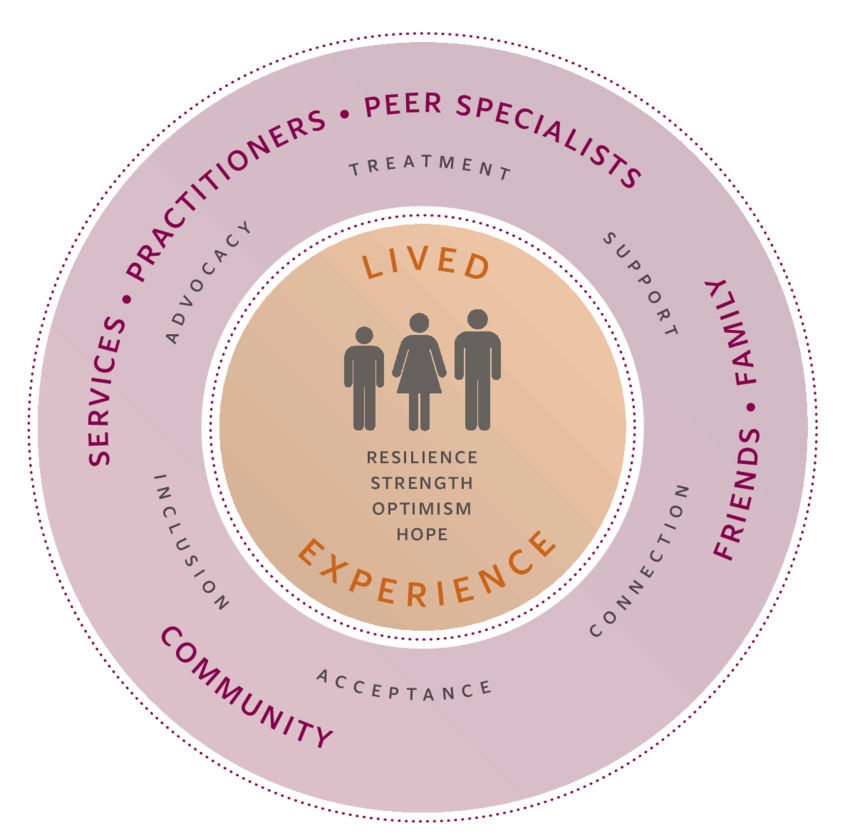
“Psychosocial Recovery should be human rights focused, recovery-oriented, trauma informed, strengths based, person-led, focus on capacity building and be holistic”
- Mental Health Australia


Psychosocial Recovery Coaching / Mental health support for Autistic / ADHD women and Teens
incorporating the Wellness Recovery Action Plan (WRAP)
The Wellness Recovery Action Plan (WRAP) is a self-designed prevention and wellness process that anyone can use to get well, stay well and shape their life the way they would like it to be. The WRAP program is modelled on best practices to engage individuals in an understanding that they have personal resources they can use to direct their own wellness, help them stay well, feel better, and equip others to best support them in times of crisis.
Key recovery concepts:
Hope – People who experience mental health difficulties get well, stay well and go on to meet their life dreams and goals.
Personal Responsibility – It’s up to you, with the assistance of others, to take action and do what needs to be done to keep yourself well.
Education – Learning all you can about what you are experiencing so you can make good decisions about all aspects of your life.
Self-Advocacy – Effectively reaching out to others so that you can get what it is that you need, want and deserve to support your wellness and recovery.
Support – While working toward your wellness is up to you, receiving support from others, and giving support to others will help you feel better and enhance the quality of your life.
My work as a Mental Health/Psycho-social Recovery Coach for Neurodivergent Women & Teens
Nat works directly with you, supporting neurodivergent women and young people who may also live with co-occurring mental health conditions.
For example, anxiety, depression, C-PTSD (trauma) are the most frequently co-occurring conditions of autism and ADHD.
Nat has lived experience of anxiety, diagnosed with Generalised Anxiety in her 20’s, whilst living with anxiety for most of her life. She has also experienced post-natal depression, physical trauma (a car accident in 2012), as well as being “unknowingly neurodivergent” for 44 years…. and finally, ‘diagnosed’ as autistic + adhd in her mid-40’s. Nat also has diagnoses of hEDS and Dysautonomia/Pots.
Qualifications/CPD:
Blue Knot Foundation - trauma sensitive practice: working with complex trauma
Evolve Professional Development - trauma informed practice
Blue Knot Foundation - Three phased approach: safety and stabilisation
BA Psychology (Social Science)
Graduate Certificate Autism Studies
Graduate Certificate Mental Health
$100 / hour (for NDIS funding you must have Psychosocial Recovery Coaching stated in your plan).
The concept of recovery model.